Choosing Commercial & Fire Door Hinges
Commercial doors can be heavier and operate far more frequently than a typical residential internal door.
The correct hinge therefore needs to be selected according to the door weight, height and width, frequency of use, number of hinges, door construction and any required fire performance.
Where a fire-rated door is involved, hinge selection must also follow the evidence for the complete doorset rather than relying simply on the physical size or grade of the hinge.
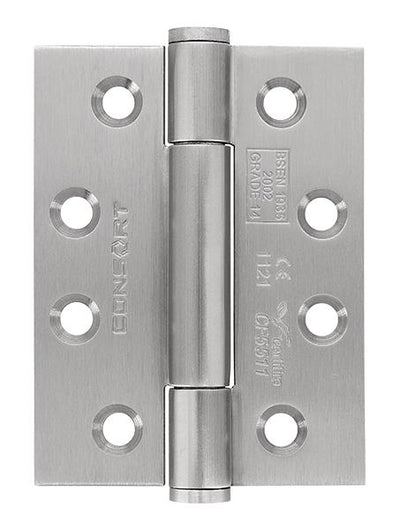
Grade 11, Grade 13 & Grade 14 Hinges
Commercial hinges are commonly described using performance grades such as Grade 11, Grade 13 and Grade 14.
These grades help identify hinges intended for progressively more demanding door applications.
However, the hinge grade should not be confused with the fire rating of the door. Fire suitability must be supported separately by the relevant fire-test or certification evidence.
Always check the individual hinge specification, permitted door mass, number of hinges and intended application before selection.
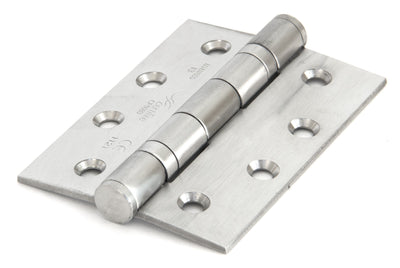
Grade 13 Door Hinges
Grade 13 hinges are widely used for heavy-duty commercial doors and frequently used entrances.
Selected Grade 13 ball-bearing hinges within our range are designed to support substantially heavier doors when installed in the specified hinge configuration.
They can be particularly appropriate for hotels, offices, schools, healthcare buildings, apartment developments and other high-traffic environments.
Where they are being used on a fire-rated door, confirm that the specific hinge also carries appropriate fire-performance evidence.
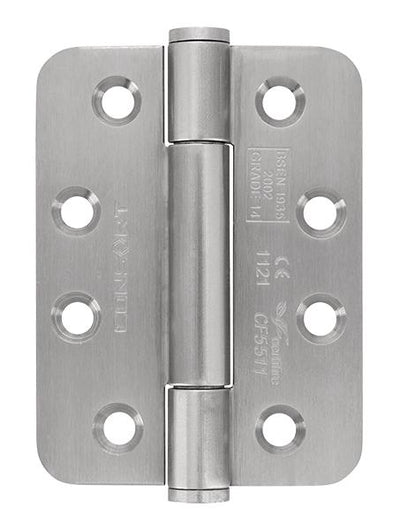
Grade 14 Door Hinges
Grade 14 hinges provide another option for particularly demanding door applications.
Selected Grade 14 hinges within our range offer higher stated door-load capacities than many Grade 11 and Grade 13 alternatives.
They can be useful for large or heavy doors where a standard commercial hinge does not provide sufficient capacity.
The manufacturer's specified hinge quantity, door dimensions and installation details should always be followed.
Ball Bearing Hinges
A ball bearing hinge incorporates bearings within the hinge knuckle to reduce friction during operation.
This helps provide smooth movement and makes ball-bearing hinges particularly suitable for doors subject to frequent use.
For commercial buildings, the combination of controlled movement, tested durability and suitable load capacity makes ball-bearing butt hinges one of the most common architectural hinge types.
Lift-Off Hinges
A lift-off hinge allows the door leaf to be removed by lifting it from the hinge rather than unscrewing the complete hinge assembly.
This can be useful in specialist commercial applications where the door may need to be removed for maintenance or access.
Lift-off hinges can be handed, so always check whether a left- or right-handed version is required.
Where the hinge is being used on a fire door, the exact product and installation arrangement must be supported by the relevant fire-door evidence.
Fire Door Hinge Certification
A hinge should not be described as suitable for a fire door simply because it is heavy duty.
Where fire performance is required, look for supporting evidence such as fire-test documentation, third-party certification or doorset-specific approval.
The hinge must then be installed in the configuration covered by that evidence.
Fire resistance relates to the complete door assembly, including the door leaf, frame, hinges, lock or latch, door closer, seals and installation.
BS EN 1935
BS EN 1935 is the performance standard commonly referenced for single-axis hinges used on doors and windows.
Products tested to this standard are classified according to factors including durability and intended loading.
This makes the classification useful when comparing hinges for commercial applications, but the EN 1935 grade alone does not establish the fire-resistance period of the complete doorset.
Fire Testing & EN 1634-1
Selected hinges within our range also carry fire-test evidence referring to EN 1634-1.
This is separate from the general hinge-performance classification and relates specifically to fire-resistance testing.
Always check the exact certificate or supporting documentation for the hinge being specified, including door type, fire duration and installation requirements.
Intumescent Hinge Pads
Certain fire-door hinge specifications require intumescent hinge pads or protection behind the hinge leaves.
The intumescent material is designed to react under fire conditions and forms part of the tested hinge and doorset arrangement.
Where the hinge documentation specifies an intumescent pack, it should be installed exactly as required rather than treated as an optional accessory.
Door Weight & Number of Hinges
Hinge load ratings are normally based on a particular number of hinges and defined installation conditions.
For example, a hinge may state a maximum door mass when three hinges are used.
This does not mean that the same load applies if only two hinges are installed.
Door height, width, centre of gravity, closer forces and frequency of use can also affect the load placed on the hinges, so manufacturer guidance should always be followed.
Commercial Door Applications
Heavy-duty hinges are commonly required in buildings where doors operate frequently throughout the day.
Typical applications include hotels, schools, hospitals, offices, apartment common areas, public buildings and other high-traffic environments.
Selecting an appropriately tested hinge can improve long-term reliability and reduce wear on the door, frame and surrounding hardware.
Choosing the Right Finish
Commercial hinges are available in a wide variety of architectural finishes.
Satin and Polished Stainless Steel are popular for specification-led commercial interiors, while Black, Satin Brass, Antique Brass, Chrome and Nickel allow the hinge to coordinate with surrounding door furniture.
For external or particularly aggressive environments, material grade and corrosion resistance should be checked separately from the decorative finish.
Frequently Asked Questions
What hinges should I use on a fire door?
Use hinges supported by appropriate fire-test or certification evidence for the particular door construction and required fire resistance.
The complete doorset specification should determine the hinge type, quantity, fixings and any required intumescent protection.
Does Grade 13 mean a hinge is fire rated?
No.
Grade 13 describes the hinge's performance classification. Fire-door suitability must be supported separately by relevant fire-test or certification evidence.
What is the difference between Grade 11 and Grade 13 hinges?
Grade 13 hinges are generally intended for more demanding applications and can support heavier doors than many Grade 11 products.
However, always compare the individual manufacturer's stated load capacity and certification.
What is a Grade 14 hinge?
Grade 14 is a high-performance hinge classification used on demanding door applications.
Selected Grade 14 products can accommodate particularly heavy doors, subject to the manufacturer's specified installation.
How many hinges does a commercial door need?
Three hinges are common, but the correct number depends on the door height, weight, width, hinge rating and doorset specification.
Always follow the relevant manufacturer's or doorset guidance.
Do fire door hinges need intumescent pads?
Some fire-tested hinge configurations require intumescent hinge protection.
Where it forms part of the test or certification evidence, the specified intumescent pack should be installed.
What does Certifire approved mean?
Certifire is a third-party product-certification scheme used for fire-protection products.
Where a hinge carries Certifire approval, check the certificate number and scope to confirm the applications covered.
Are commercial hinges only for fire doors?
No.
Heavy-duty commercial hinges are also used on non-fire-rated doors where high door weight, frequent operation or increased durability requires a more robust hinge.
Need Help Choosing Commercial or Fire Door Hinges?
The correct hinge will depend on your door dimensions, weight, frequency of use, required performance grade and any fire-resistance requirements.
Roundtower Hardware supplies a range of commercial and fire door hinges in Ireland, including Grade 11, Grade 13 and Grade 14 options with supporting performance and fire-test documentation.
Contact our team with your door schedule or specification if you need help selecting the correct hinges and associated intumescent protection.