Choosing the Right Door Stop
A door stop helps control how far a door can open, reducing the risk of the door or handle striking walls, furniture or surrounding surfaces.
Although relatively simple, choosing the correct type of door stop depends on the door position, opening angle, floor and wall construction, fixing location, level of use and preferred finish.
The stop should be positioned so that it makes contact with a suitable part of the door before the handle or other ironmongery can strike the wall.
Floor-Mounted Door Stops
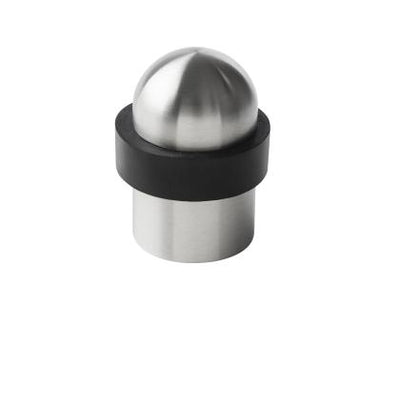
A floor-mounted door stop is fixed securely into the floor and provides a defined stopping point for the door.
Floor stops are widely used because their position can often be selected independently of skirting boards or surrounding wall surfaces.
They are available in a variety of shapes, including cylinder, half-moon, oval and low-profile designs, allowing the stop to suit both traditional and contemporary interiors.
Before installation, consider the floor construction and ensure that a suitable fixing can be achieved without damaging services beneath the floor.
Wall-Mounted Door Stops
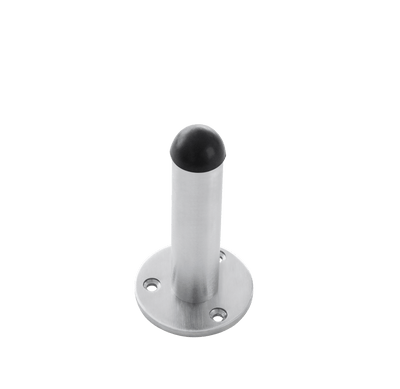
A wall-mounted door stop is fixed to the wall or another suitable vertical surface behind the door.
This can be particularly useful where fixing into the finished floor is undesirable or where underfloor services make floor drilling unsuitable.
Wall-mounted stops should be positioned so that they contact a strong part of the door rather than a vulnerable panel or glazed area.
Longer projection stops can also be useful where the door handle projects significantly from the face of the door.
Skirting Door Stops
Skirting-mounted door stops provide another practical option where a stop can be fixed directly to the skirting board or lower wall area.
They can help avoid drilling into finished flooring and are available in standard and extra-long projections.
When selecting a skirting stop, check that the skirting and supporting wall provide a sufficiently secure fixing and that the projection is long enough to prevent the door handle reaching the wall.
Heavy-Duty Door Stops
A heavy-duty door stop may be preferable on larger, heavier or frequently used doors.
Commercial buildings, offices, hotels and other high-traffic environments can place significantly greater loads on door hardware than a lightly used domestic internal door.
The complete fixing arrangement is important. A heavy-duty stop will only perform properly when securely fixed into an appropriate floor or wall substrate.
Choosing the Correct Position
Correct positioning is just as important as selecting the stop itself.
The door should contact the rubber buffer or stopping surface before the lever handle, door knob, pull handle or other ironmongery reaches the wall.
Avoid positioning the stop so close to the hinge side that excessive leverage or stress is placed on the door.
Before drilling, open the door slowly to the desired maximum angle and temporarily position the stop to confirm that both the door and handle have adequate clearance.
Choosing a Door Stop Finish
Door stops are often clearly visible, so the finish can be coordinated with the surrounding architectural hardware.
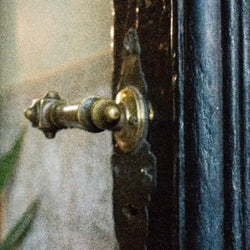
Traditional interiors can work particularly well with Aged Brass, Bronze, Black, Beeswax and Pewter, while Satin Brass, Chrome, Nickel and Stainless Steel can complement more contemporary door furniture.
Using a door stop in the same or a complementary finish as your handles and hinges can make even this small piece of hardware feel like part of the overall ironmongery scheme.
Door Stops for External & Coastal Areas
Where a door stop is being installed externally or in a highly exposed environment, the base material and finish need additional consideration.
Selected marine-grade 316 stainless steel products can provide increased corrosion resistance for more demanding locations.
Always check the manufacturer's stated suitability for the individual product, particularly in coastal environments.
Frequently Asked Questions
What type of door stop should I choose?
The best option depends on where the door stops and what surfaces are available for fixing.
A floor-mounted stop can provide a secure and discreet solution, while wall or skirting-mounted stops are useful where fixing into the floor is undesirable.
Where should a floor door stop be positioned?
Position the stop so that it prevents the handle or other door furniture from reaching the wall.
Before drilling, open the door to the required maximum angle and check the proposed contact point carefully.
Is a wall or floor door stop better?
Neither is automatically better.
A floor stop can provide a strong fixing where the floor construction permits it, while a wall-mounted stop avoids drilling into the floor and can be particularly useful where underfloor services are present.
Can I fix a door stop to the skirting board?
Yes, skirting-mounted door stops are specifically designed for this type of installation.
The skirting and supporting construction need to provide a sufficiently secure fixing for the expected impact from the door.
What is a projection door stop?
A projection door stop extends out from the wall or fixing surface to meet the door before the handle reaches the wall.
Longer projections can be useful where handles or other door furniture project substantially from the door face.
Do I need a heavy-duty door stop?
Heavy-duty stops are worth considering for large, heavy or frequently used doors, particularly in commercial and high-traffic environments.
The stop must also be securely fixed into a substrate capable of taking the repeated load.
Can door stops be used outside?
Selected products may be suitable for external use, but this depends on the material, finish and environmental exposure.
For demanding or coastal environments, check whether a suitable marine-grade stainless steel option is available.
Should my door stop match my door handles?
It does not have to, but coordinating the finish with door handles, hinges and other visible ironmongery can create a more consistent appearance.
Need Help Choosing a Door Stop?
The correct door stop will depend on your door size, opening position, fixing surface, expected level of use and preferred finish.
Roundtower Hardware supplies a wide range of door stops in Ireland, including floor-mounted, wall-mounted, skirting and heavy-duty options for residential and commercial applications.
Browse our collection online or contact our team if you need help choosing the right door stop for your project.